Making of Tay Ninh chili salt recognized as Vietnam’s national intangible cultural heritage
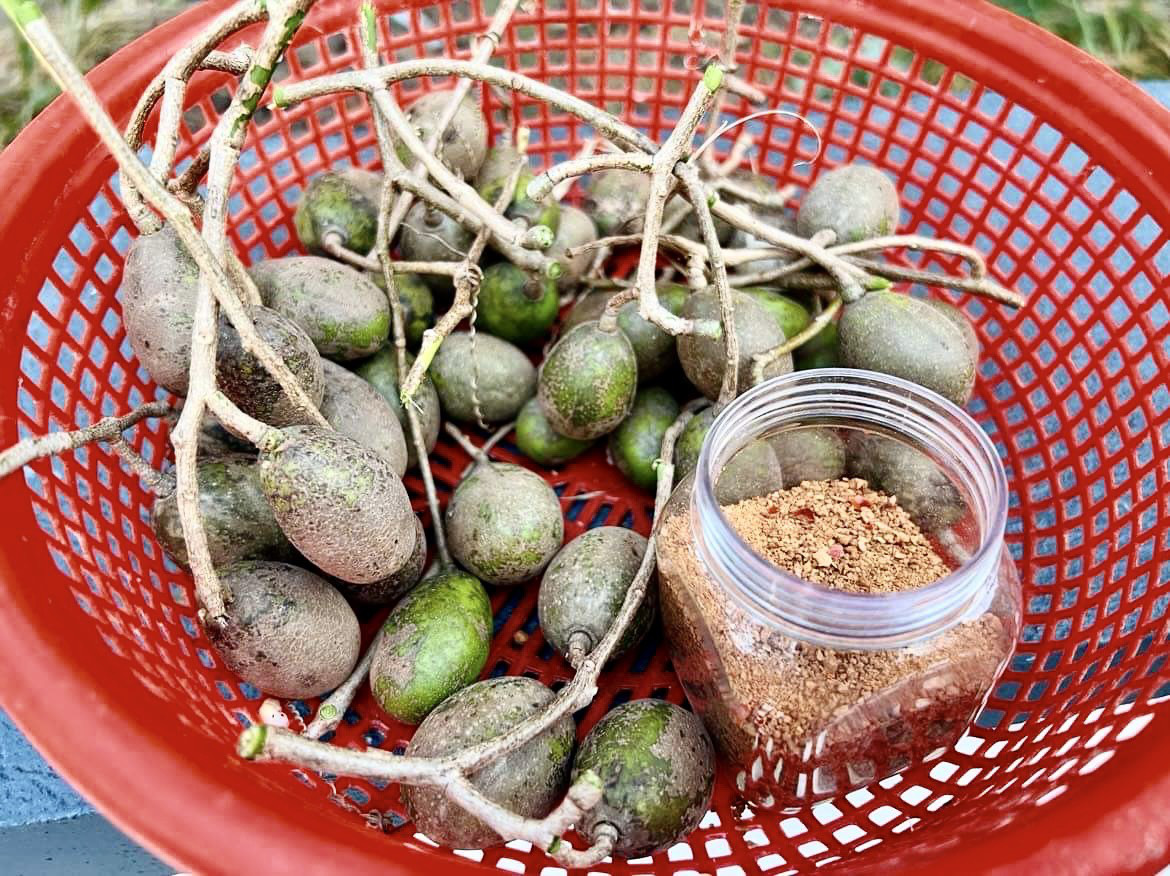
The traditional profession of making chili salt in Tay Ninh Province, southern Vietnam has officially become the country’s national intangible cultural heritage.
The Ministry of Culture, Sports, and Tourism recently signed a decision to recognize the making of chili salt in Tay Ninh Province as national intangible cultural heritage.
As of 2022, 37 facilities across Tay Ninh had registered their chili salt trademarks, according to the provincial Department of Culture, Sports, and Tourism.
The main ingredients to make this salt include salt, chili, garlic, monosodium glutamate, lemongrass, and dried shrimp.
|
|
| Tay Ninh chili salt is served with fruits. Photo: Duyen Phan / Tuoi Tre |
The chili salt is often served with various types of tropical fruits to enhance their flavors.
The profession of making chili salt is the eighth cultural heritage of Tay Ninh to be recognized as national intangible cultural heritage.
The remaining cultural heritages include Don Ca Tai Tu (Southern Folk Music), Ky Yen Festival, the making of Trang Bang dew-dried rice paper, the worship of Saint Linh Son on Ba Den Mountain, and the art of cooking vegetarian dishes, among others.
Like us on Facebook or follow us on Twitter to get the latest news about Vietnam!
The post Making of Tay Ninh chili salt recognized as Vietnam’s national intangible cultural heritage appeared first on Vietexplorer.com.
View more from VietExplorer:
Traditional music livens up Hanoi’s Old QuarterIn all occasions, a xôi fix satisfies cravings
Floating markets – a typical cultural feature of the Mekong region
New rice ceremony of the M’nong Gar
French bakery training offers bright future for youth
Vietnam’s folk music treasure promoted
Jr NBA returns to Vietnam for 4th year
Unique wedding rituals of the Pa Ko
Healer keeps Hoi An clean her own way
Hanoi’s lotus tea-making art
Clothes of the Cao Lan in Bac Giang province
Pang A festival of the La Ha
Extracurricular class fuels ethnic minority students’ passion for Gong culture
Flower Festival of the Cong in Dien Bien
Quang Ninh province preserves ethnic culture
Clothes of the Gie Trieng
H’Yam Bkrong devoted to preserving traditional brocade weaving of Ede people
Get off the beaten path with these hi-capacity bike taxis in central Vietnam
The Chut’s “Filling the holes” celebration
House architecture of the Mong


Comments
Post a Comment