This year the flower street is scheduled to open to the public from 7 p.m. on February 7, two days before the Lunar New Year’s Eve, and is due to close on February 14, the fifth day of the first lunar month.
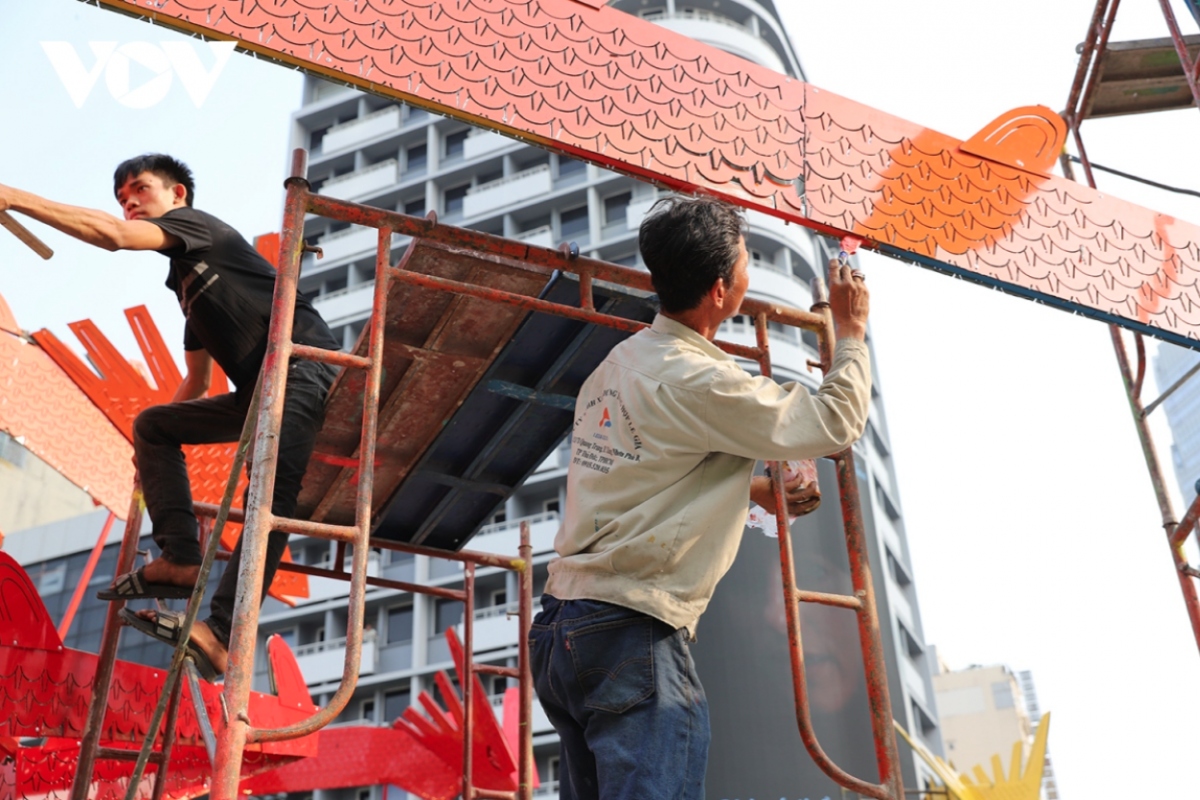
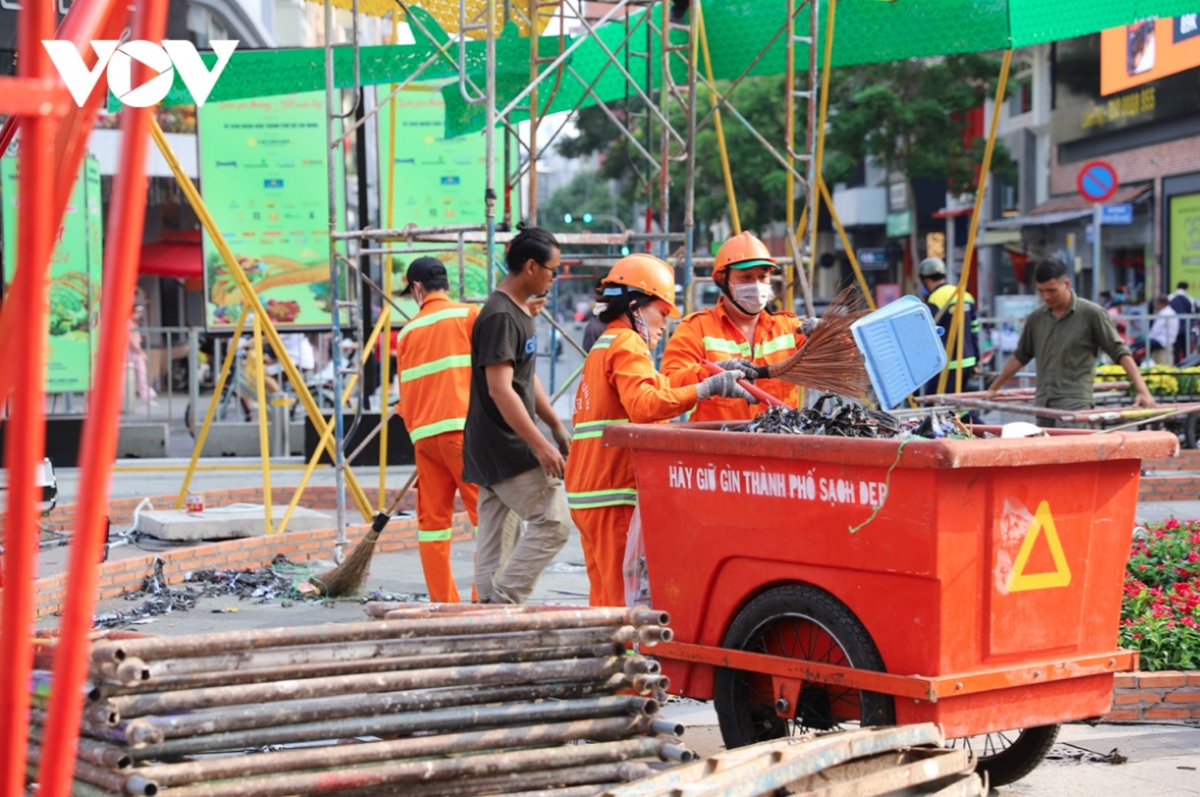
As of February 6, the construction and decoration process is almost complete.
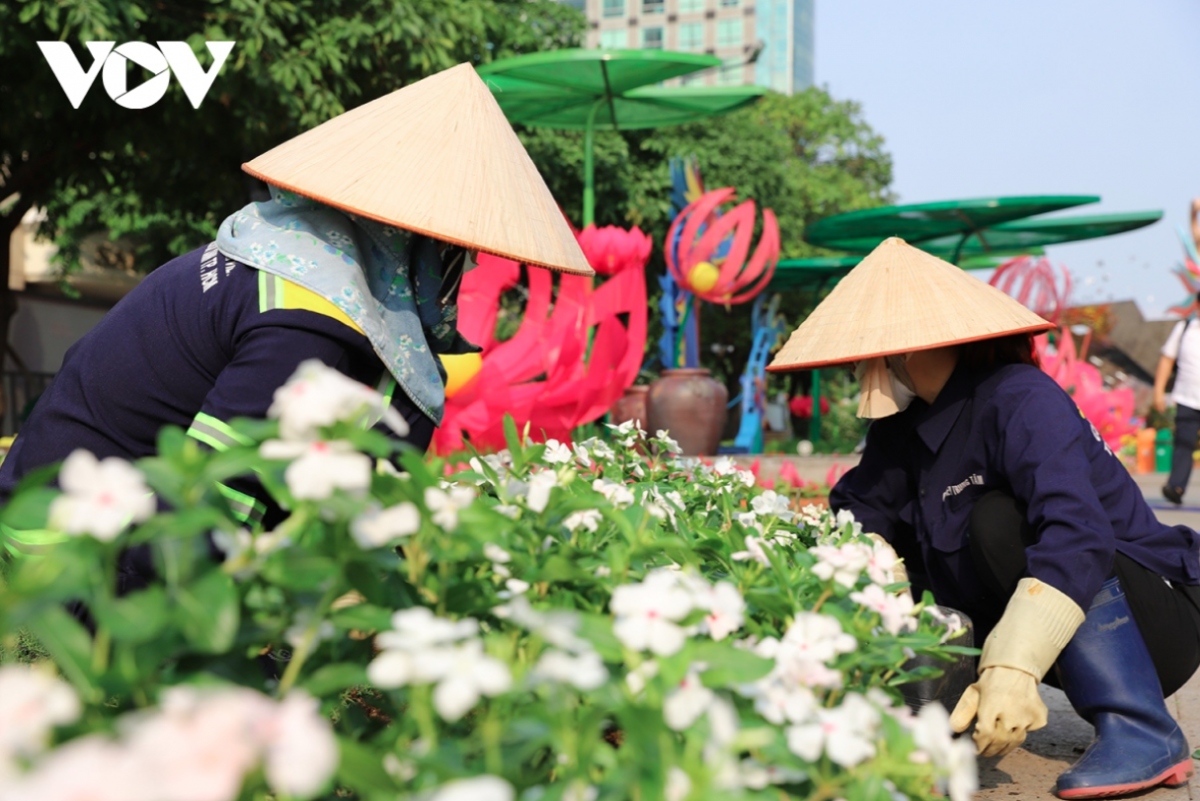
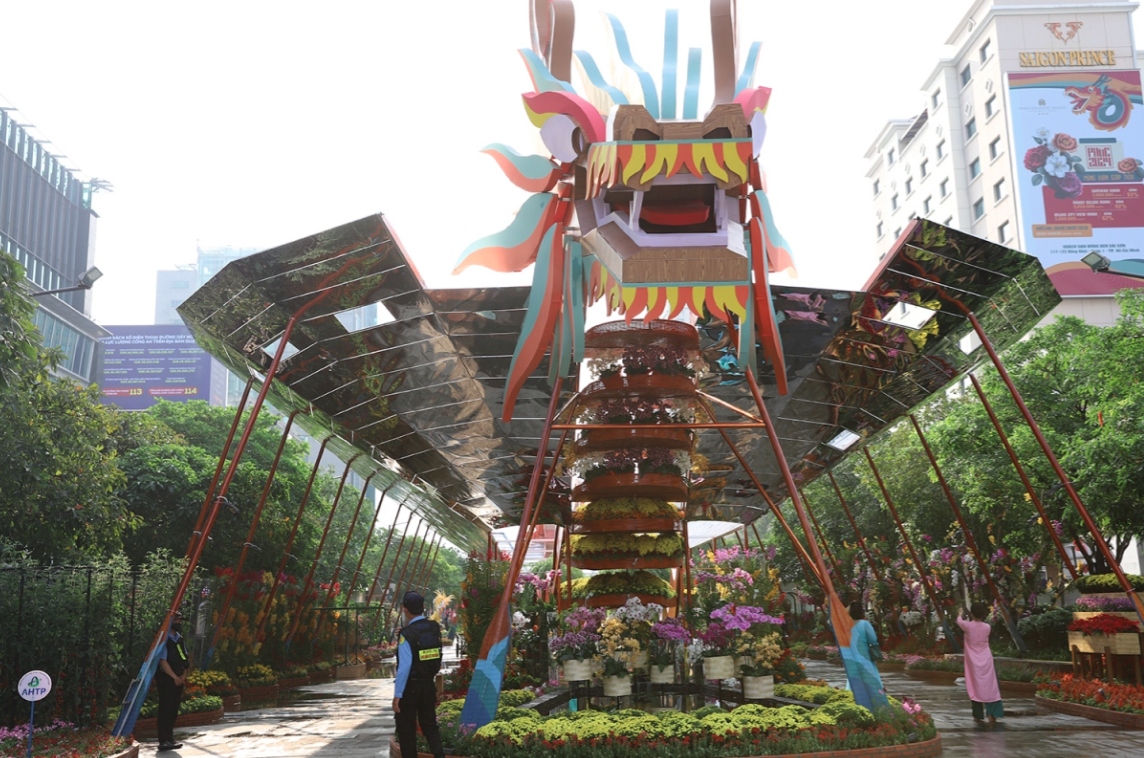
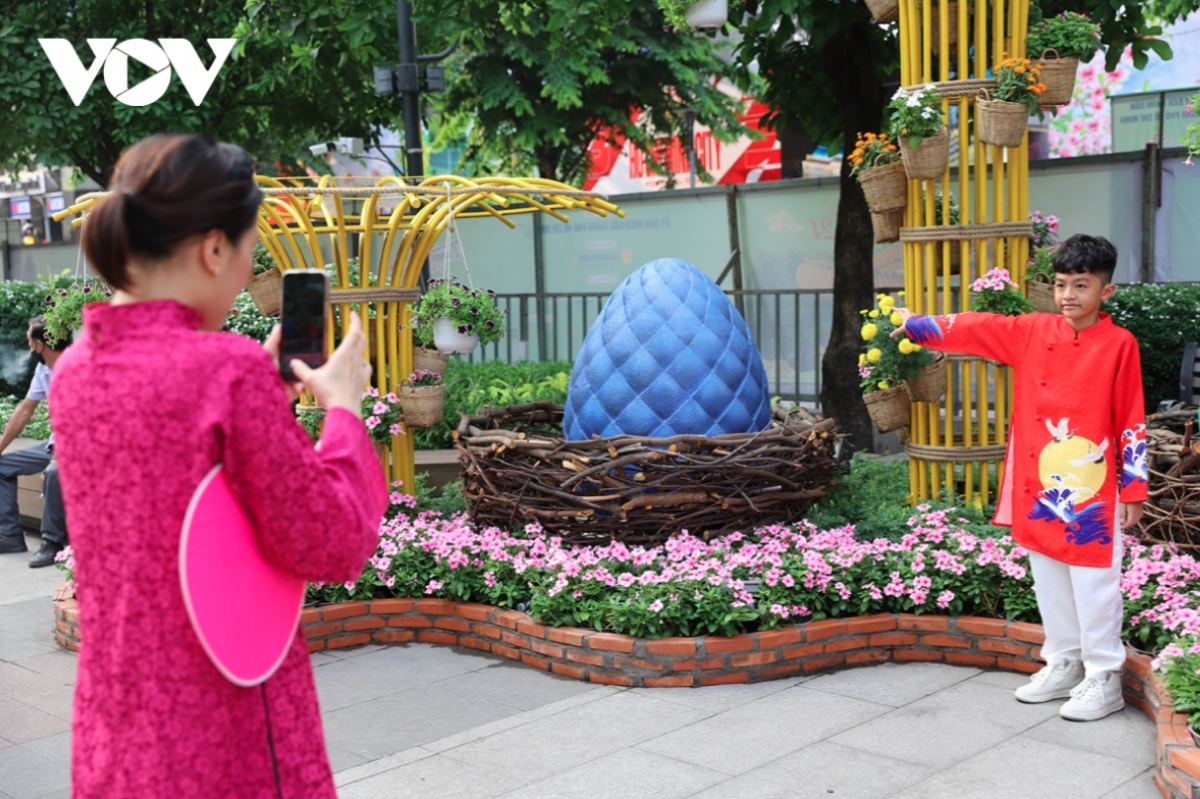
Preparations taking place at Nguyen Hue flower street are almost finished so that the venue will be ready to welcome visitors during the upcoming Lunar New Year, known locally as Tet.
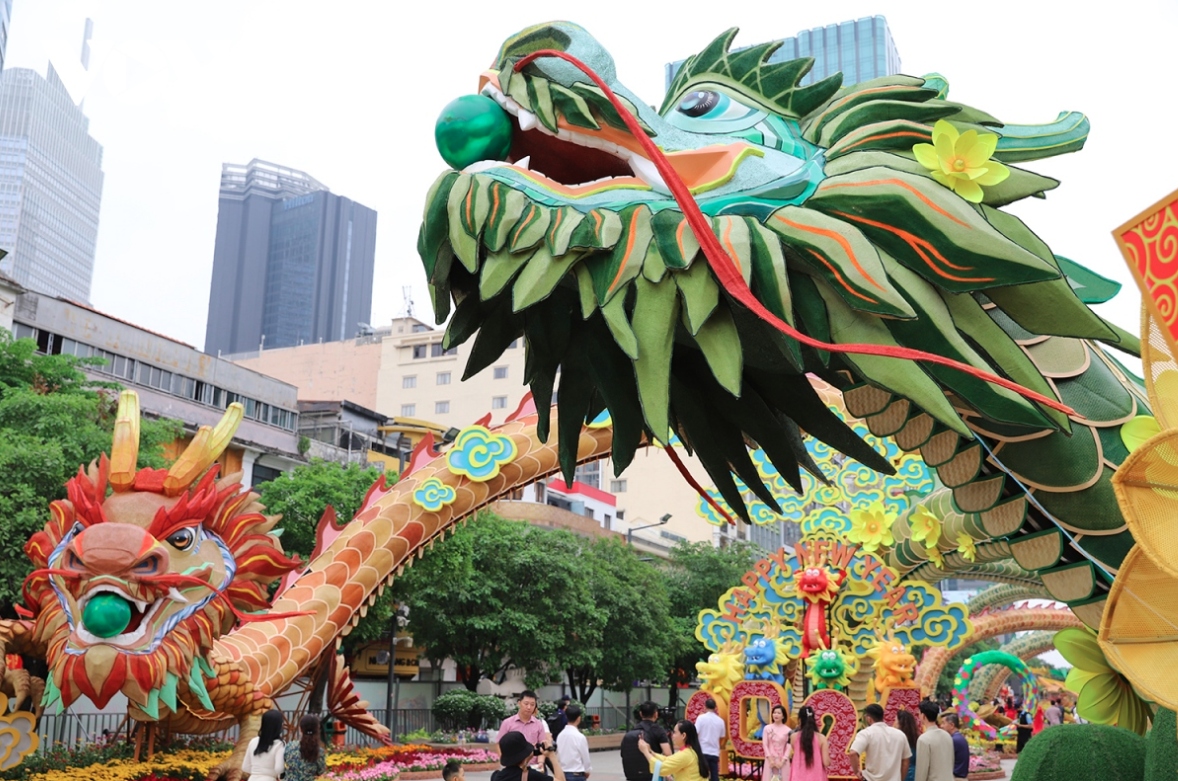
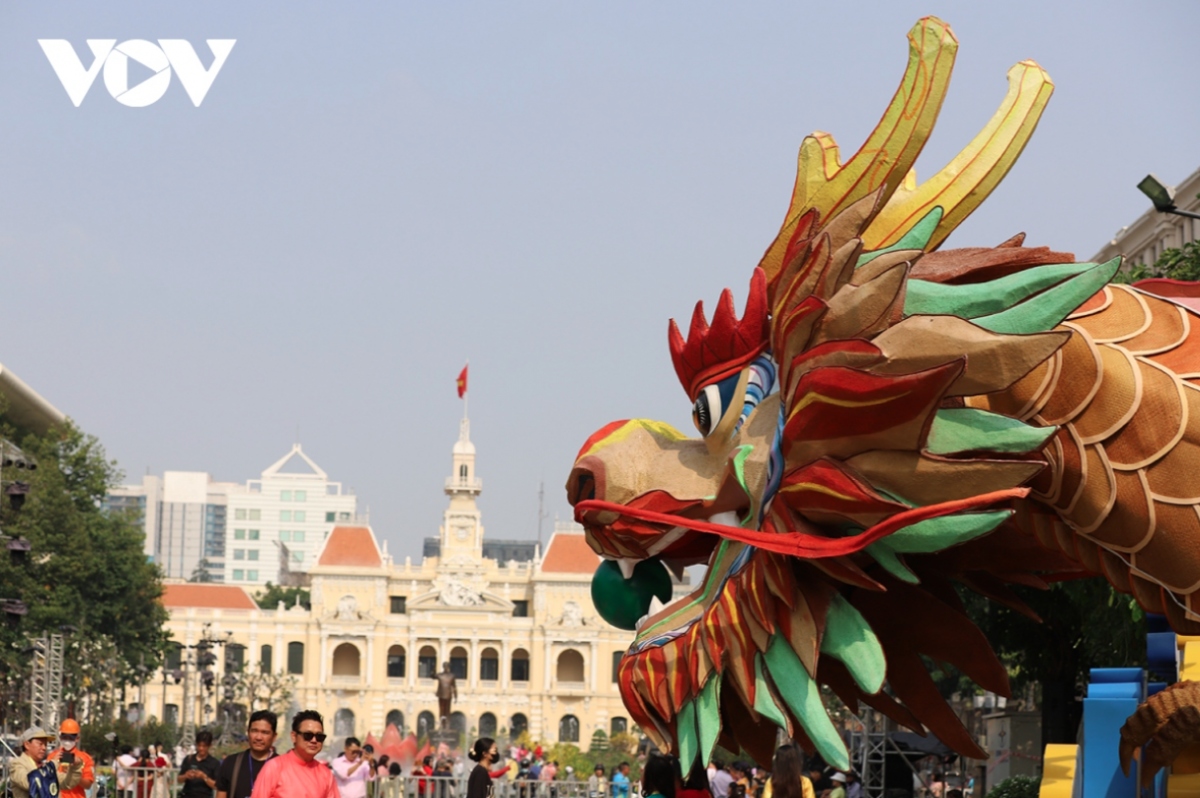
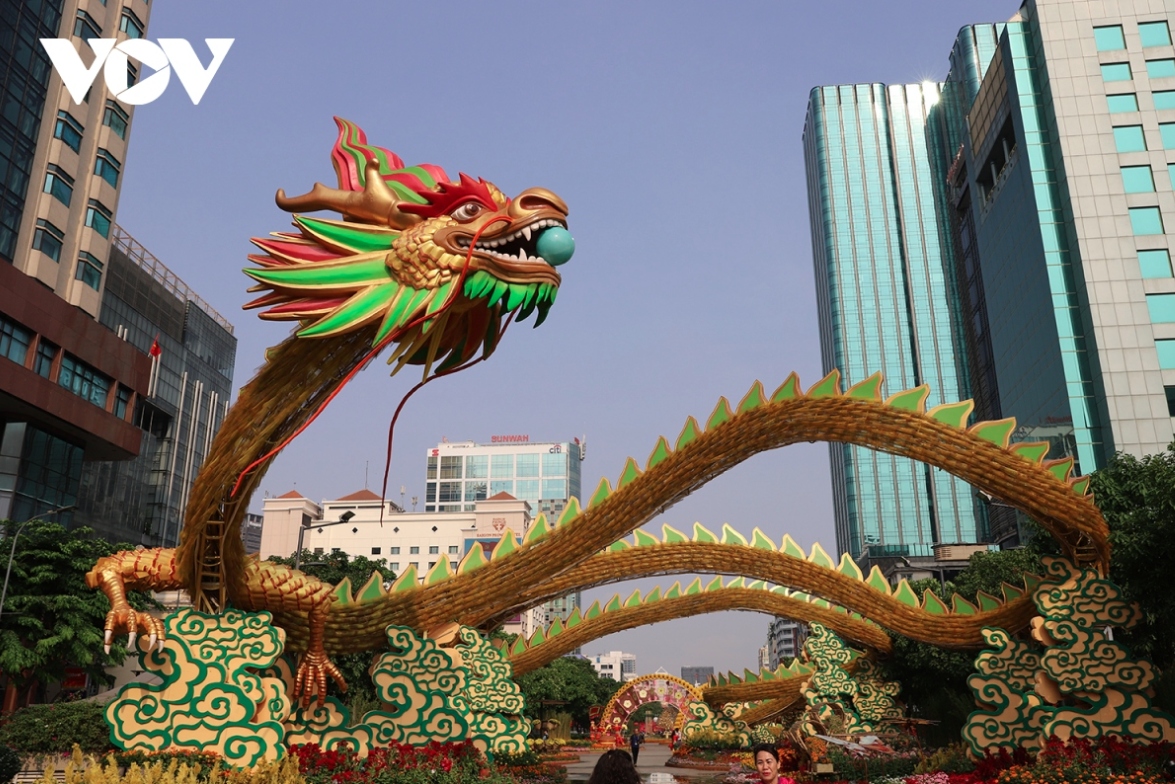
The gateway of the street features the two dragons’ mouths to hold pearls made from plastic with lights inside.
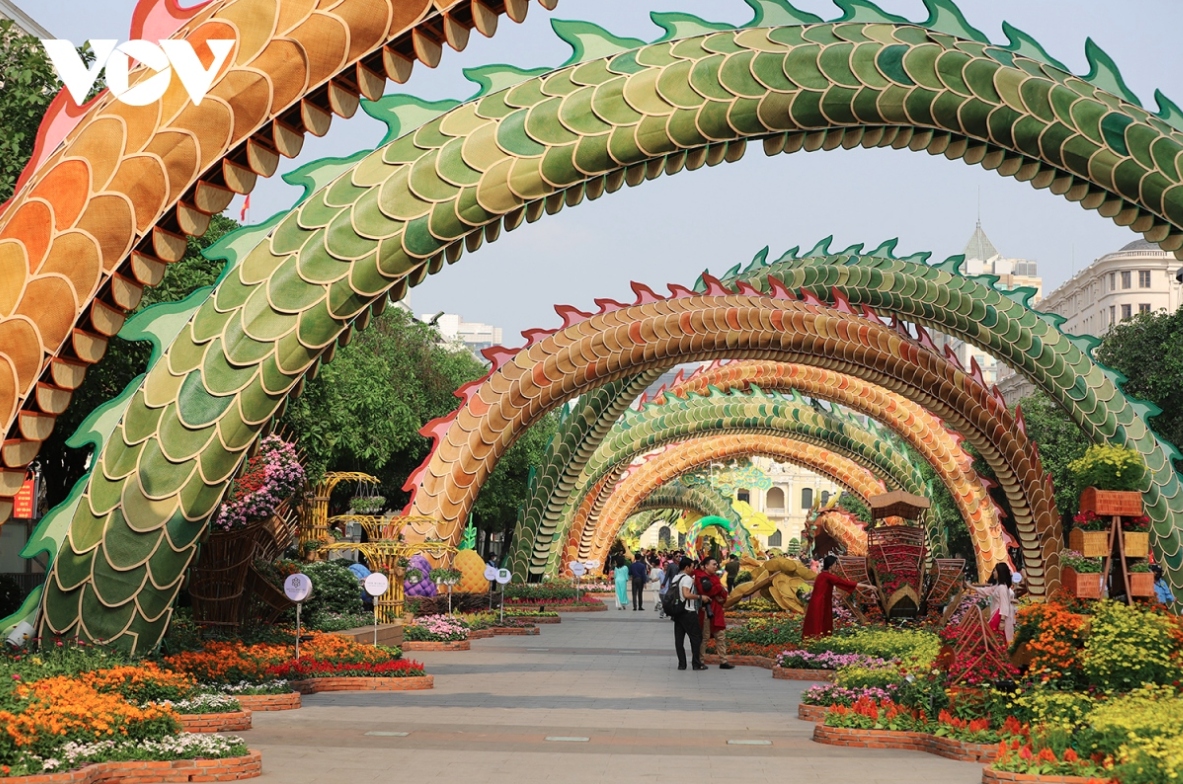
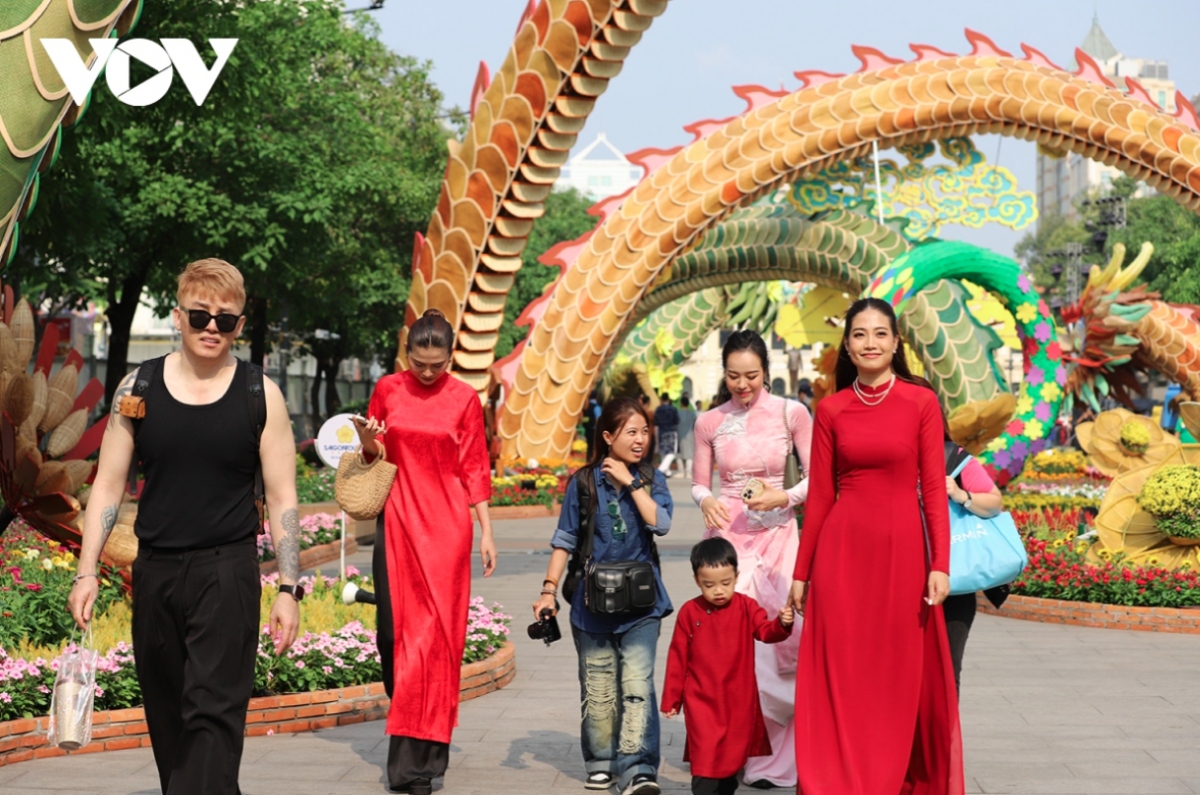
The dragons intertwines for the majority of the street, creating beautiful patterns 10 metres above those walking on the street.
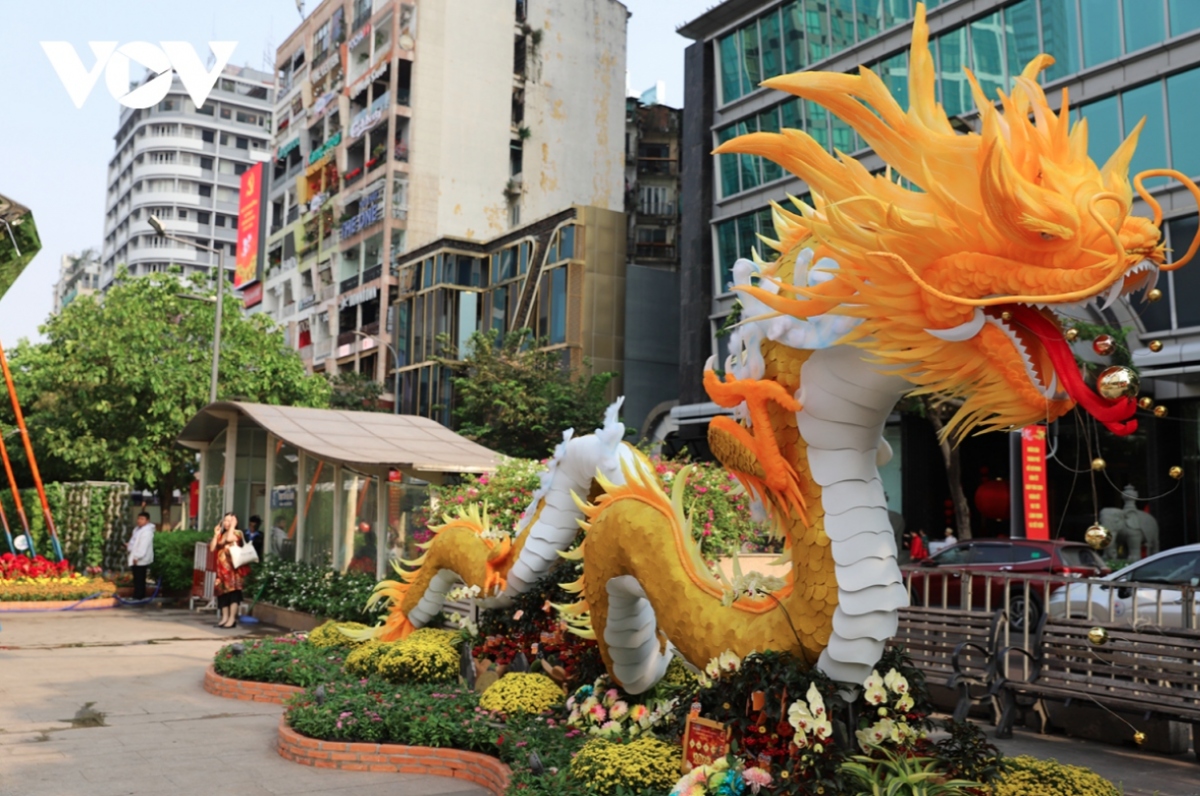
The dragon mascots on Nguyen Hue street follow the styles of dragon statues from Vietnamese royal families, including Ly, Tran, and Nguyen.
A large number of potted flowers are transported to the venue as part of the decoration.
The annual flower show, which showcases the festive culture of Tet, has become hugely popular and attracts more than a million visitors each year.
The blooming bauhinia variegata trees make many people think they are lost in the mountain of the Northwestern region. The bauhinia variegata flowers are conspicuous, white and purple, with five soft petals, featuring the typical beauty of the high mountain in the north. The Ban flower season starts in late February and lasts till April. When the flowers are blooming, they look like a fan. Although there are several colours, white and purple are the main colours. At the beginning of the flower season, many roads in Hanoi look more romantic and attractive. On weekends, many foreign visitors choose to call at Ciputra to watch bauhinia variegate blossoming. “We feel as if we get lost in a mountain in the northern highlands of Vietnam,” says Shachin, an Indian visitor and his wife. The Indian couple do not forget to capture an impressive moment right in Hanoi instead of travelling far up north. “We are very happy and l...
There are now very few families pursuing the trade, but they still try to continue preserving the brand of the traditional trade village. A golden age Few families in Bay Hien weaving village use looms. Nguyen Thi Hue, 80, is the oldest artisan and is one of very few artisans following the ups and downs of the village. She can no longer weave with looms due to her poor eyes and shaking hands. She still remembered the beautiful memories of a golden age of the village. She was born in a commune that was famous for weaving in Dien Ban District, Quang Nam Province. She learned how to spin thread and take shuttle when she was 10 years old. In the 1950s-1960s in the previous century, Quang Nam was devastated by fierce war and harsh nature, making the people’s lives getting more miserable. Many local people migrated to the south and chose this land (now Ward 11) to live and work, creating a small "Quang Nam land’ in the inner Ho Chi Minh City. Early people made their living ...
The UK and EU member nations will no longer enjoy visa-free travel to Vietnam , according to a proposal submitted to the government by the country’s steering committee on COVID-19 fighting and prevention. Vietnam will also halt its visa exemption policy for citizens of other countries outside of the EU where over 500 cases have been reported or more than 50 new infections are recorded in a single day, according to the proposal. Foreigners who have symptoms of il lness or recent travel history to areas hit by a COVID-19 outbreak will be denied entry into Vietnam . The proposal was announced by Deputy Prime Minister Vu Duc Dam as he chaired a meeting for COVID-19 prevention in Hanoi on Sunday night. Citizens of Russia, Japan, South Korea, Denmark, Norway, Sweden, Finland, and Belarus currently enjoy visa-free travel to Vietnam until December 31, 2022. Nationals from the UK, Germany, Italy, France, and Spain are also exempted from applying for a visa when visiting Vietnam un...


Comments
Post a Comment